EXPERT INTERVIEWS
Lídia Bonet
“For me, the value of AI is not that it makes the hiring decision for us. It’s that it can help us make that decision with better information.”
Human Resources Consultant · LidiaBo.Net
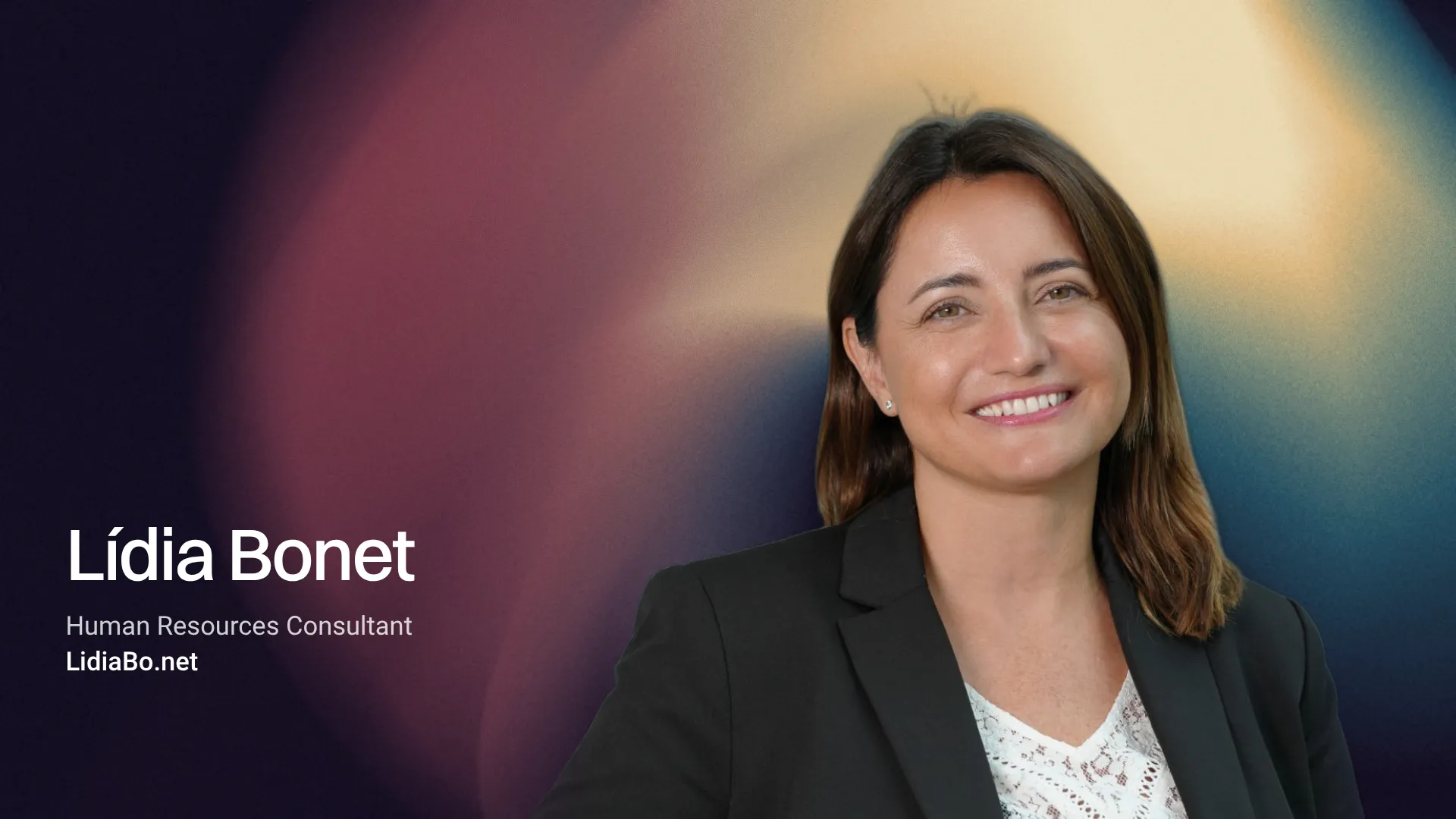
What if the problem isn’t how fast we screen CVs, but how much we still rely on them? Lídia Bonet, Human Resources Consultant, talks about rethinking recruitment before automating it, using AI to give more candidates a voice, and moving from reactive hiring to anticipating talent.
You started your career as an engineer and later moved into Human Resources. How has your engineering mindset influenced the way you work with people?
I come from a family of engineers, so analytical and logical thinking has always been part of my environment. When I moved into HR, I naturally brought that mindset with me.
For me, engineering is about understanding how things work within a bigger system. It's about seeing the connections, questioning why things are done a certain way, and looking for opportunities to improve them. I tend to approach people-related challenges in much the same way: understanding the bigger picture, identifying the different stakeholders and their needs, questioning existing processes, and looking for the root causes rather than just addressing the symptoms.
And for me, this also means connecting people-related challenges with the business strategy. I like understanding not only what the organization needs today, but where it wants to go and what capabilities it will need to get there.
I also believe in making data speak. But that doesn't mean blindly trusting every KPI. I've sometimes been quite critical of metrics that look impressive on a dashboard but tell us very little about what's really happening, or that can easily be manipulated. Data should help us ask better questions and make better decisions, not simply give us numbers to report.
And then there's the engineering approach of designing, testing, learning and improving. I think this mindset can bring a lot of value to HR, especially when we want to move beyond executing established processes and start questioning whether they still make sense.
But what I find equally important is how HR influenced my engineering mindset.
Working in HR / People topics opened up a whole new world for me. I had the opportunity to learn about communication, difficult conversations, giving and receiving feedback, coaching, active listening, empathy, cultural differences, diversity and team dynamics. I also learned enormously from colleagues who brought a deep understanding of people and human relationships. These experiences didn't just change the way I work. They changed the way I relate to others, including in my personal life. And I think that's one of the reasons I became so passionate about this field: I experienced firsthand how powerful these skills can be, both professionally and personally. So I don't see my journey as an engineer who moved into HR and brought something different. I see it as a two-way exchange that has enriched me enormously. And perhaps that's also why I'm so interested in the intersection of people, business and technology today. I believe the greatest opportunities often emerge when we bring different disciplines together, combining analytical thinking with a genuine understanding of human behaviour. For me, that's where we can create impact that goes beyond business results and genuinely makes a difference in people's lives.
You've experienced recruitment from multiple perspectives: candidate, headhunter, corporate talent acquisition professional, hiring manager and advisor. How has this shaped your approach to recruitment?
Having experienced recruitment from so many different perspectives has helped me understand the needs, expectations and pressures of everyone involved.
But interestingly, the two roles that had the biggest impact on me were being a candidate and being a hiring manager. Perhaps because, at the end of the day, these are the people who will actually work together.
As a candidate, recruitment is deeply personal. You're not simply applying for a position. You're looking for an opportunity, a place where you can contribute, develop and build part of your future. And depending on your personal circumstances, finding a job can also come with considerable pressure and uncertainty.
As a hiring manager, I felt a different kind of pressure. Having to fight for headcount, justify why my team needed someone, and then take responsibility for a decision that would affect not only the department's results but the whole team. I felt that accountability very personally.
That experience gave me a different level of empathy for hiring managers. Today, when I work with them, I understand what's behind their requests in a way I couldn't fully appreciate before.
The other roles I've held, as a headhunter, corporate talent acquisition and advisor, have given me a broader understanding of how to facilitate that match. They helped me see the different stakeholders, understand their objectives and recognize where their interests may not always be aligned.
For me, a good recruitment process should create value for everyone involved. Not just efficiency for the organization, but also a fair and meaningful experience for the candidate. Recruitment professionals play an important role in making that possible, but we should never forget who will ultimately live with the outcome: the people who will work together once the hiring decision has been made.
Ghosting, CVs optimized for ATS filters, weeks without feedback... Which friction in today's candidate experience would you prioritize solving?
I think we sometimes underestimate how much the recruitment process contributes to a company's external reputation.
It's one of those moments when people experience an organization directly. And the impression they take away can influence not only how they see the company as an employer, but even how they perceive its products or services. Especially when you consider that the vast majority of candidates will not get the job. So candidate experience really matters.
Now, when we talk about ghosting, I think it's important to understand what's happening behind the scenes. Recruitment teams are often dealing with enormous workloads. Application volumes can be very high, and CVs are increasingly optimized for screening systems, which doesn't necessarily make it easier to distinguish candidates. At the same time, companies expect recruitment teams to handle more work because technology is supposed to make things more efficient. But the reality is that many of these tools are still not properly implemented or fully used. And even when the technology is available, someone needs the time and knowledge to configure it and make it work. So ghosting is often a symptom of a bigger problem. But understanding why it happens doesn't mean we should accept it.
No reply is a reply. And it's a bad reply.
If I had to prioritize one thing, it would be making sure that every candidate receives timely communication, even if some of it is automated. With the technology available today, that should be a basic expectation.
But once we've solved that, I think there's another challenge worth addressing. Something I often hear from candidates is: "My CV doesn't really represent me. I just wish I had the chance to talk to someone."
And I think that's an important point. We may not be able to offer every candidate a personal conversation with a recruiter or hiring manager, but perhaps we should start asking ourselves how we can give more people the opportunity to be heard, rather than evaluating them exclusively through a document.
Hiring a CFO and recruiting 500 people for the holiday season are very different challenges. What mistake do companies make when approaching both with the same process?
I think we tend to approach recruitment with a standard process, almost regardless of the hiring situation:
There's a vacancy, we discuss the ideal candidate with the hiring manager (debriefing), we publish the job, receive applications, screen CVs and organize several rounds of interviews. Of course, there are variations, but this is still the basic approach in many organizations.
Sometimes we're overwhelmed with applications and many of the CVs look quite good. How do we filter and identify the right candidates efficiently? Other times, we publish the vacancy and simply don't attract people with the skills we need.
Ideally, before launching the process, we should already have a reasonable understanding of the talent market. Are the skills we're looking for readily available? Are we likely to attract enough candidates? Are we competing for people who are already employed? What might make this particular recruitment difficult?
We won't always have all the answers, but we should try to anticipate the challenges rather than discover them only after we've published the vacancy.
For me, the recruitment philosophy can remain the same, but the strategy and process should adapt to the actual challenge. And that depends not only on the position, but also on the talent market, candidate availability and how difficult it is to attract people.
I remember a situation where we needed quite a lot of seasonal workers for an assembly plant, but only for a few months. Finding so many people available for such a specific period wasn't easy. So instead of relying only on job postings, we started thinking about who might actually be available during those months. We identified people on breaks from military service as a potential target group and even went to military facilities to reach them directly.
That experience illustrates why the number of vacancies doesn't necessarily tell you what recruitment approach you need. The same applies to senior or highly specialized roles. Sometimes the challenge is not selecting from a large pool, but finding and convincing people who aren't actively looking for a new opportunity.
So I think we should spend more time understanding the hiring challenge and the talent market before automatically launching the usual recruitment process.
What are we actually trying to solve? Is it attracting candidates? Managing volume? Assessing specific skills? Or making a difficult decision between several strong candidates?
Once we understand that, we can design a process that makes sense for that particular situation.
You've argued that automating a process that no longer works simply automates its limitations. What part of today's recruitment process should organizations rethink first?
I think recruitment is one of those processes that almost everyone seems to have something to complain about.
Candidates are frustrated by the lack of communication, the long waiting times or the feeling that they never really had an opportunity to show what they could bring. Hiring managers complain about how long it takes to find the right people, or that the candidates they receive don't necessarily match what they need. And recruitment teams and agencies are often under enormous pressure, managing high workloads and expectations from different stakeholders.
So when you have a process that creates frustration for so many of the people involved, I think that's already a good reason to question how we're doing things.
And I also see it as an opportunity. There's clearly room to improve, and with the technology available today, I think we should at least be willing to explore different approaches rather than simply making the existing process faster.
If I had to choose where to start, I would look at the initial stages of recruitment: how we attract candidates, how we collect information about them and how we make that first evaluation.
Today, we still rely heavily on CVs. And of course, CVs provide useful information about someone's experience, education and career path. But they tell us relatively little about how someone communicates, approaches problems or works with other people.
At the same time, candidates are increasingly adapting their CVs to pass automated screening systems. So we may end up using technology to evaluate documents that have themselves been optimized for that technology.
And this is where I think we should stop and ask whether we're approaching the problem in the right way.
Instead of simply asking how AI can help us screen CVs faster, perhaps we should ask whether there are better ways to get to know candidates in the first place.
For me, that's the kind of question we should be asking before deciding what to automate.
You suggest approaching recruitment like a consultant: understanding the AS-IS, defining the TO-BE, and identifying the gaps. Where should an HR team start?
Well, first of all, I wouldn't expect the operational talent acquisition team to redesign the entire recruitment process while continuing to manage its usual workload.
And we shouldn't forget that talent acquisition isn't only about filling vacancies. Depending on the organization, these teams may also be involved in employer branding, developing talent pipelines and anticipating future strategic workforce needs.
But the immediate hiring demands tend to take priority. There are vacancies to fill, hiring managers to support, candidates to manage and urgent requests to handle.
You can't ask people to redesign the machine while they're keeping it running. Or at least, you can't expect them to do it properly without giving them the time and resources.
So I think the starting point is recognizing that this is a transformation initiative, not just another task for the recruitment team. It doesn't necessarily require an external consultant. It can absolutely be done internally, but ideally by a multidisciplinary team with dedicated capacity and a clear mandate.
The operational talent acquisition team needs to participate because they understand the daily challenges. But we also need hiring managers, business representatives, people with technology and process expertise, and candidates themselves. Their experiences can reveal problems that aren't always visible internally.
Then I would start with the AS-IS: understanding how recruitment actually works today, not just how it's supposed to work. That means listening to stakeholders, looking at the data and identifying where time is lost, where candidates drop out, where frustrations arise and which activities create value.
From there, we define the TO-BE. What should recruitment look like? What experience do we want to create for candidates and hiring managers? What information do we need to make good decisions? And how should recruitment connect with the organization's broader talent strategy? Once we have that picture, we can identify the gaps, prioritize changes and decide what technology could help us.
For me, that's the important sequence. First understand the process, then decide how to improve it, and only then look at what to automate or where new technologies add value. Otherwise, we risk investing in technology without really changing the way recruitment works.
You propose using AI to give more candidates a voice rather than simply filtering more people out. Where would you draw the line between what technology can assess and what humans should decide?
In recruitment, we usually need to assess 3 different dimensions:
The first is whether someone can do the job. That includes technical skills, experience and the competencies required for the position.
The second is whether we can work well together. And I don't mean just the hiring manager. I mean the team, the internal stakeholders and sometimes even the external customers this person will be working with. Someone can be technically excellent, but we also need to understand how they communicate, collaborate and interact with others.
And the third is motivation. Why this role? Why this company? Why now? And why do they see themselves working with us?
I think we sometimes underestimate that last dimension. As a hiring manager, you're not just looking for someone who can perform the tasks. You're bringing someone into a team. You invest time in onboarding, training, building relationships and learning how to work together.
So, of course, you want someone who genuinely wants the opportunity and sees a future in it. But the candidate also needs to understand whether the role, the organization and the expectations are right for them.
It's a little bit like dating. Both sides need to want the relationship. And ideally, both should see the possibility of building something together.
Now, where does AI come into this?
I think technology can already help us considerably with the first dimension. It can help assess certain technical skills, knowledge and job-related capabilities. And depending on how it's designed, it can also help us explore some behavioral competencies and understand candidates' motivations.
But I would be much more cautious about allowing technology to decide whether people will work well together, or whether someone's motivations are the right ones.
AI can help us collect information, ask relevant questions and give more candidates the opportunity to explain who they are and what they're looking for.
But interpreting that information requires context. And ultimately, the decision to work together should remain with the people involved.
For me, the value of AI is not that it makes the hiring decision for us. It's that it can help us make that decision with better information, including information we might never have had the opportunity to collect through a traditional CV-based process.
Looking five years ahead, which part of today's recruitment process do you think will seem most outdated?
As I mentioned before, I think we may question how heavily we relied on CVs to make the first decisions about candidates, especially when technology could give us other ways to understand what people can bring.
But if I look at the recruitment process more broadly, I think another thing that may seem outdated is how reactive it still is.
In many organizations, recruitment starts when a vacancy opens. A manager needs someone, the position is approved, the job is published, and only then do we start looking for candidates.
By that point, we're often already under pressure. The team needs someone, everyone wants the vacancy filled quickly, and sometimes that's when we discover that the skills we're looking for are difficult to find.
Of course, proactive recruitment isn't new. I've managed a global team of talent scouts myself, and many organizations already build talent pipelines and anticipate future needs. But I think we could take this much further. I'd like to see much closer collaboration between Talent Acquisition, business leaders, workforce planning, Talent Management and Learning & Development. If we know that certain skills will be needed in two or three years, why wait until we have a vacancy to start looking for someone who already has them? We could identify people with potential earlier, both inside and outside the organization, and invest in developing those capabilities. That could mean internal mobility, training programs, partnerships with educational institutions or even hiring people in advance and preparing them for future roles. In some cases, instead of competing for a limited pool of qualified candidates, we could help create that pool.
And I think AI and technology could support this by helping us understand how skills are evolving, anticipate gaps and connect future business needs with available talent and development opportunities.
Of course, not everything can be anticipated. There will always be unexpected vacancies and changing business priorities.
But I hope that in five years, we'll question why we so often wait until a position becomes vacant before thinking seriously about where the talent will come from.
For me, the real evolution would be moving from recruitment as a response to an immediate vacancy towards a much more collaborative approach to anticipating, attracting and developing the talent organizations will need in the future.
You've been living in Switzerland since 2012 and have Mediterranean roots. What have you learned from Swiss working culture that you would like to see more of in Spain?
There are several things I appreciate about Swiss working culture: reliability, accountability, planning and long-term thinking. But if I had to choose one, it would be the way people manage the boundaries between work and private life.
In Spain, I think we still have quite a strong culture of presence. Spending long hours at work is sometimes seen as a sign of commitment, even when those extra hours don't necessarily translate into better results.
What I've experienced in Switzerland is that people can be very committed, take their responsibilities seriously and work efficiently, while also protecting their personal time. Leaving work at the agreed time doesn't mean you're less dedicated. And that's something I've really learned to appreciate.
I think we should question the idea that professional commitment needs to be demonstrated through long working hours. What matters is the contribution you make, not how long you're seen sitting at your desk.
And of course, there are things I value enormously about my Mediterranean background too, especially the personal relationships, spontaneity and adaptability.
For me, the ideal would be to combine the best of both cultures.